Our Chicken Setup: A Novel

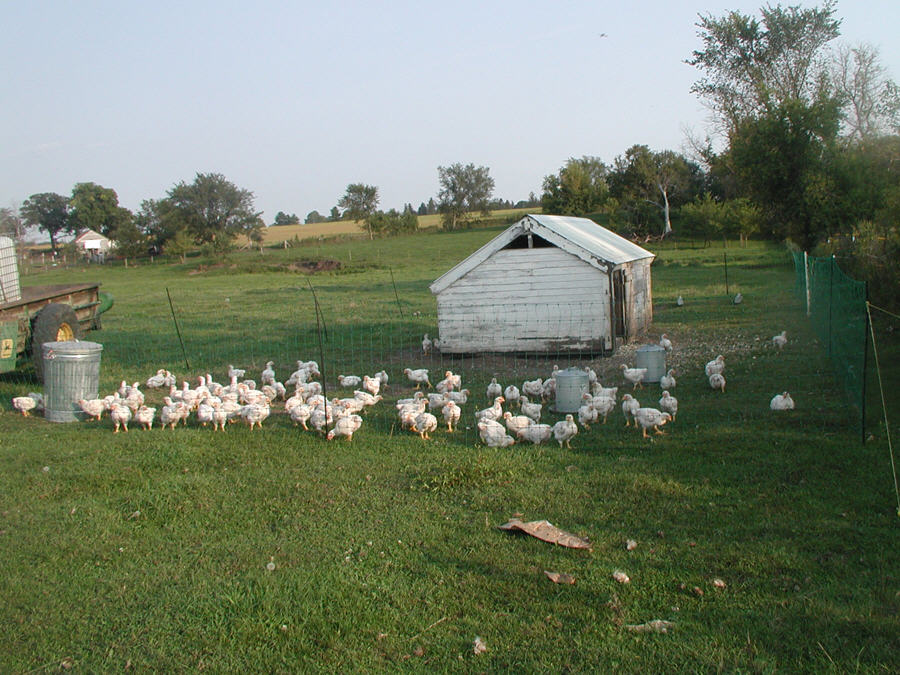
Karl asked for a picture of our chicken setup. Karl, your wish is my command!
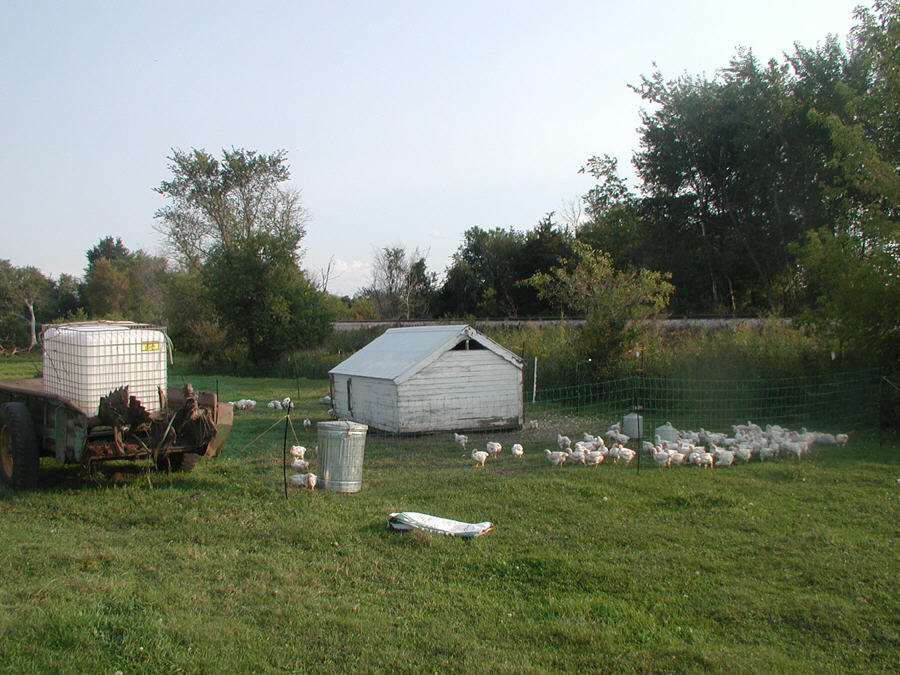
Karl did maybe not ask for the novel which follows, but unfortunately for him (and you) here it is anyway.

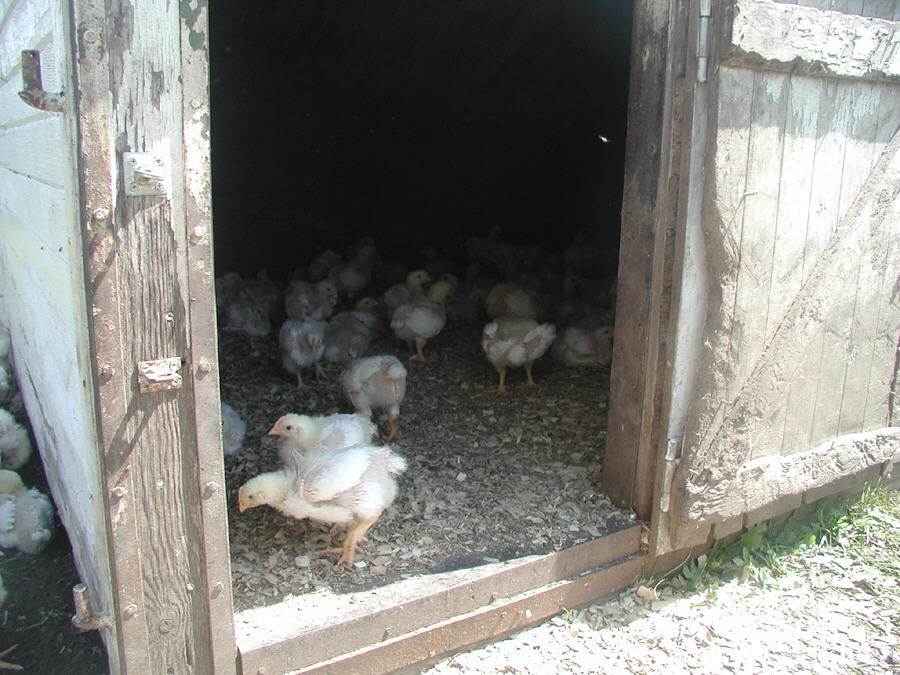
We bought the little insulated hog house on skids for our portable pasture chicken house. It measures somewhere around 7 x 11. In the past, when we’re done with broiler chickens for the year, we pull it back up to the barnyard and use it as winter housing for our sow and boar. Once it’s time to farrow we kick the boar out, make a temporary creep inside with a heat lamp, and the piglets are born in there. It’s a nice little multi-purpose building. Now that we have the the JLo’s we won’t be able to do that anymore. I think we paid around $200 for it.

The shed is surrounded by electric poultry netting, I think about 150′ of it. This is the 6th batch of birds we’ve used it on, but I don’t remember what we paid for it. This hooks into one of the 2 electric strands that runs the perimeter of our 10 acres of pasture. The only predator problem we’ve experienced so far, out of about 615 birds, is that on 2 occasions we’ve lost one to an owl. If you live in an area with a lot of “overhead” type predators, this might be more of a problem for you. Our neighbor told us he was out for a walk and saw 2 dogs running through our pasture. They ran up to that electric netting, touched a nose to it, yelped and ran away. And there was a steer that jumped the fence once but he was after the chicken feed, not the chickens.

We keep a metal garbage can inside the pen to store the feed. The lid is held on with a bungee cord. The water tank sits in the manure spreader and we run a garden hose from it to fill the waters, just a gravity flow setup. When the water is gone Matt pulls the spreader and all up to the house, fills it, and brings it back. The water tank was cheap, if not free.

The only thing missing from this picture is the tarp we usually set up. It attaches to the long side of the building, zip tied into fence staples set into the wood. The other side is zip tied to a piece of metal conduit bent into a 3-sided rectangle (if that makes any sense at all). The conduit is secured with tent stakes and string, providing the tension to hold the tarp up off the ground. On hot days we shut the birds out of the building, and the tarp provides shade while allowing fresh air and circulation they wouldn’t get inside the shed.

How often we move the whole setup depends on the condition of the grass. When the birds are little, we can go about 10 days. When they get bigger, or if we have a lot of rain, we have to move more like once a week. But by now we have the routine down, the family works as a team and it’s done in under an hour. We just take the fence down, drag it over to the next patch of grass, let the birds meander about until we’re ready, then herd them over to the new area and set the fence up around them.

One of the problems we’ve had is that they have to be taught to go inside the shed at night. I wasn’t vigilant about that this time, and last week we lost 5 broilers and poor little Chuck in a heavy overnight rain. If it’s daylight when it starts to rain they’ll seek shelter inside the shed, but when they’re already bedded down for the night they just pile up and die. But that was a preventable problem, as now they’re all going in at night on their own. It just takes a few nights of going out at sundown and herding them into the shed.

Why did we go with this setup over chicken tractors? First, almost all of our farm sits on a downhill slope. What doesn’t sits in the floodplain of the creek. It seemed like we would have a lot of problems with gapping around the bottom of the chicken tractor, sitting on rough sloping ground, and that this would be asking for predator problems.

Second, (and let me preface this by saying I’m not knocking anyone that uses chicken tractors!), chicken tractors just seemed a little too confined to us. I’m not talking subsidized, big ag CAFO confinement. But still, the chicken tractors we saw didn’t seem to us to provide enough space for them to really act their most chicken-y and get enough room to run and flutter about. Then again I could be totally wrong, seeing as how we never actually tried a chicken tractor setup. This setup is just what works for us.

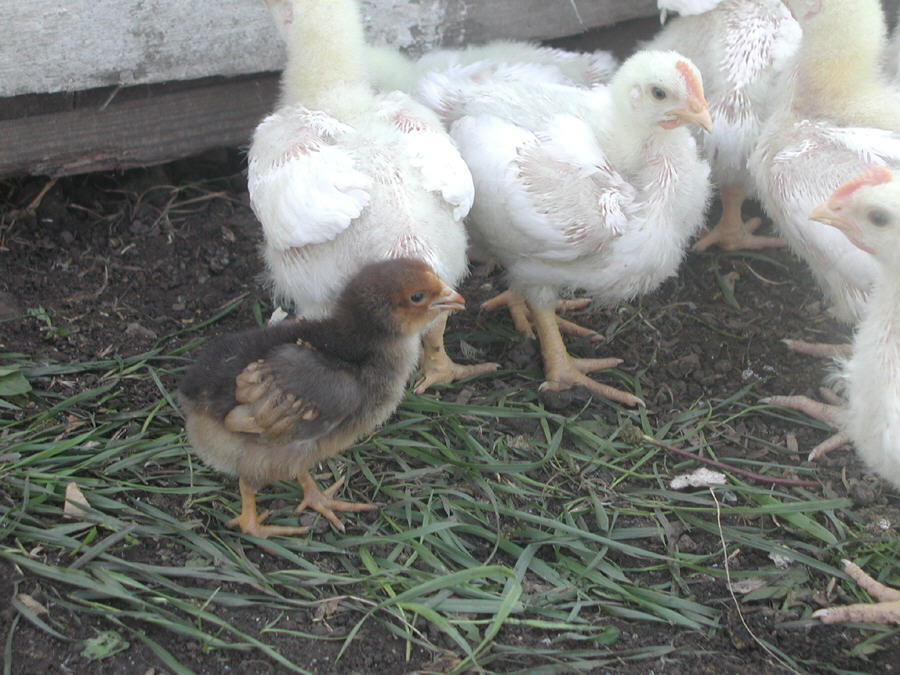
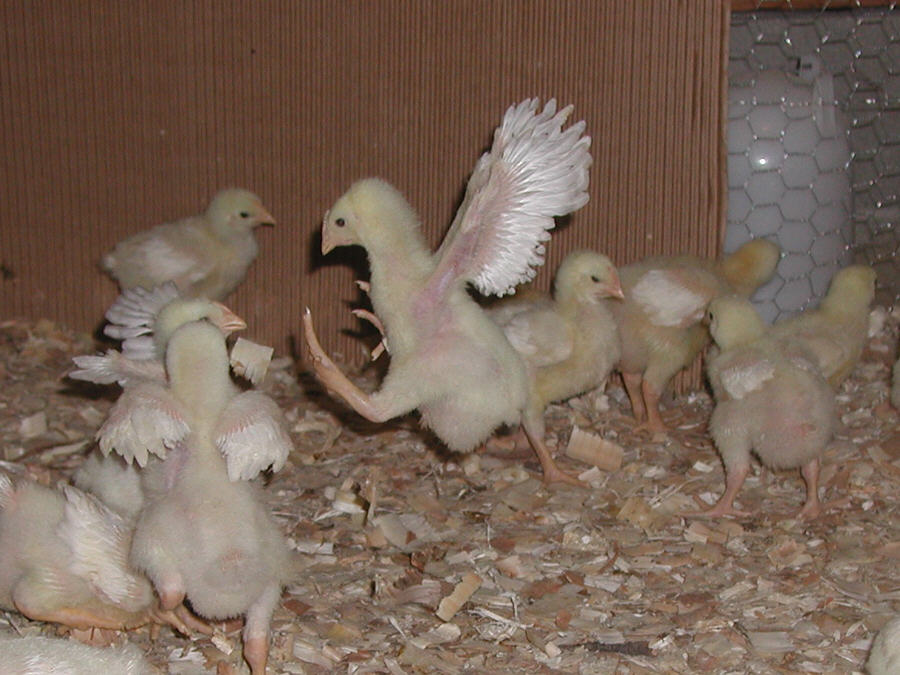
I’ve been reading some Cornish Cross bashing on other blogs lately. I won’t go into all of the arguments, but honestly I just can’t identify with some of the comments calling these birds “Frankenblobs”. That just hasn’t been our experience. We find that they’re quite active, running, flapping their wings, vaulting themselves into the air in funny little practice cockfights. (“Cockfights” – that ought to get me some Google hits!) They have the room – both vertical and horizontal – to do that in this setup. We haven’t experienced “mushy” meat, either. Our meat is firm textured and seemingly low in fat, and I think it’s because they’re getting lots of exercise. Meat is muscle, after all, and muscle is built with use.

The rapid growth on these birds can come with its own set of problems, but by the 4th batch of 100 I’d learned a lot of tips and tricks to raising them (mostly by trial and lots of error) so that now we very rarely have leg problems, ascites or “flips”. But that’s another novel for another day, and anyway I’m still learning.

I will say you need to buy quality stock from a reputable hatchery. I’m fortunate, I live only miles from Hoovers Hatchery. I get to go in there to pick up my chicks and when I do I get to see a wonderful family business and the good, small-town hardworking people that have jobs in part because I buy my chicks there. I’ve also bought layer chicks there and had great success with them.

Here endeth the novel 🙂
Posted in Uncategorized | 2 Comments

Lather, rinse, repeat

When Matt picked all those beans last week, I thought this is it. Really, really it. Those beans have to be done this time for sure.

I stand corrected.

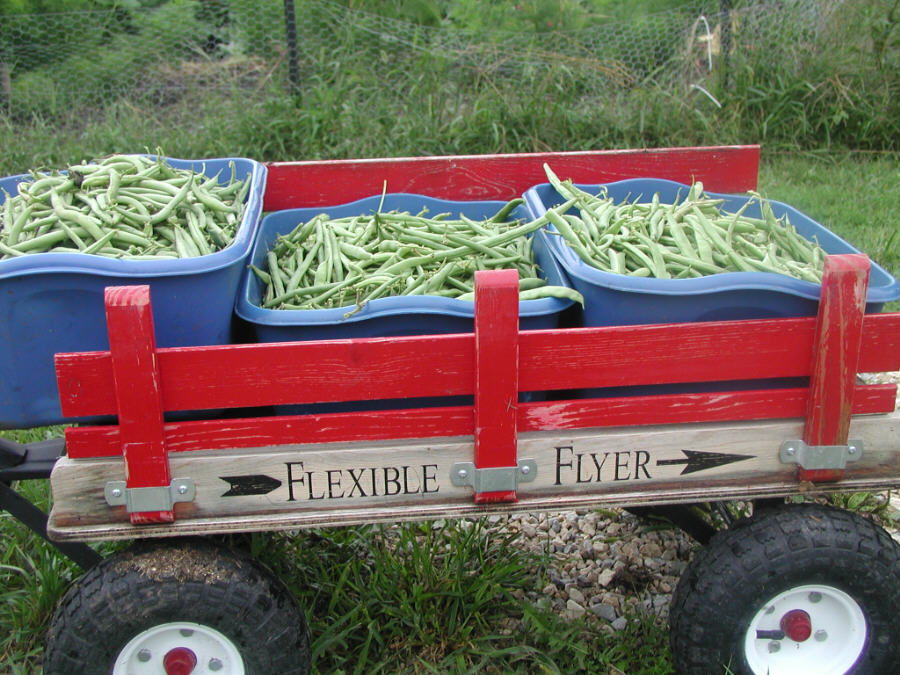
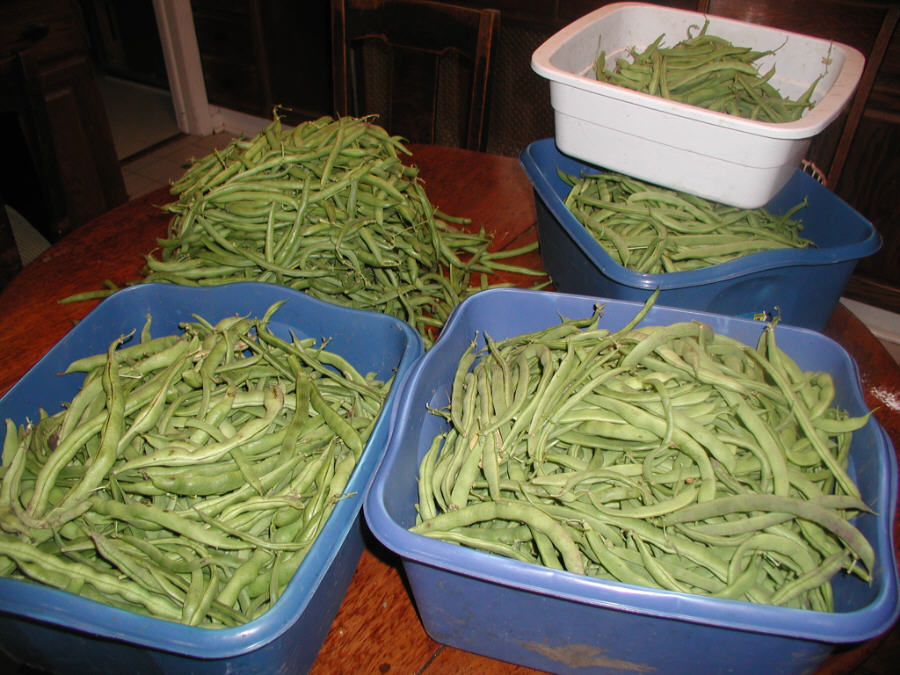
There were even more beans than last week. I did help pick this time, but Matt did all the snapping and pressure canning. Even after tossing out the too-big ones to the pigs, saving a gallon for ourselves to eat fresh, and giving away another gallon, he still ended up with 20 quart-jars of beans.

At 2 a.m. on Sunday morning.

Yep, he’s a keeper.

So is it the heirloom varieties, or the weather we had this year that gave us such a prolific harvest? We’ll see what happens next year. Fun, how gardening is really just one big ongoing lifelong science experiment.

This week, we’re done with the canning, whether the beans are done or not!

Posted in Uncategorized | 1 Comment

That thing you do

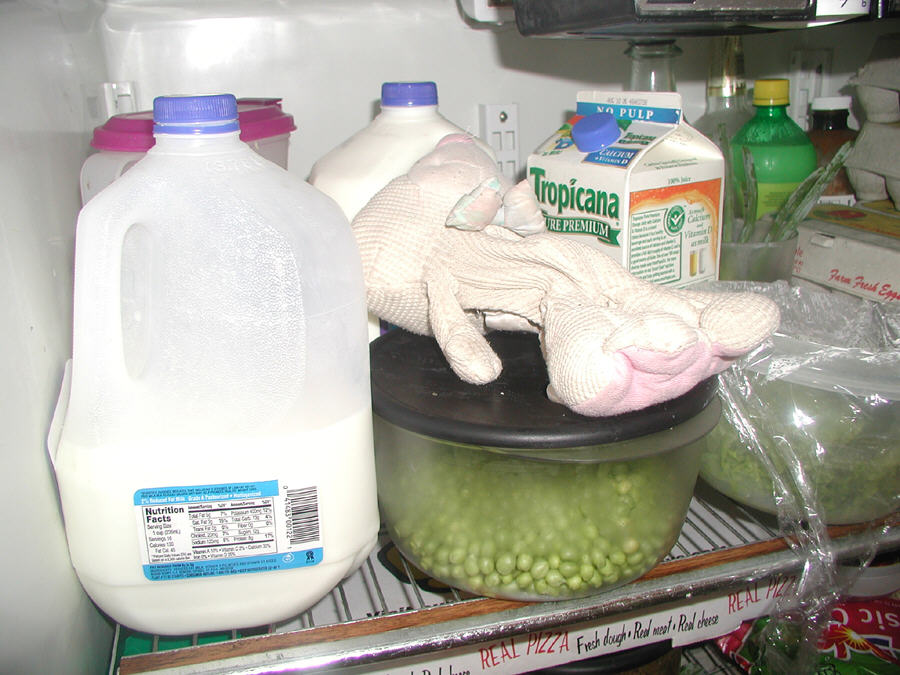
Rafe likes to keep things in the refrigerator for safe keeping. One day I opened the door to find “Bear” lying on top of the peas.

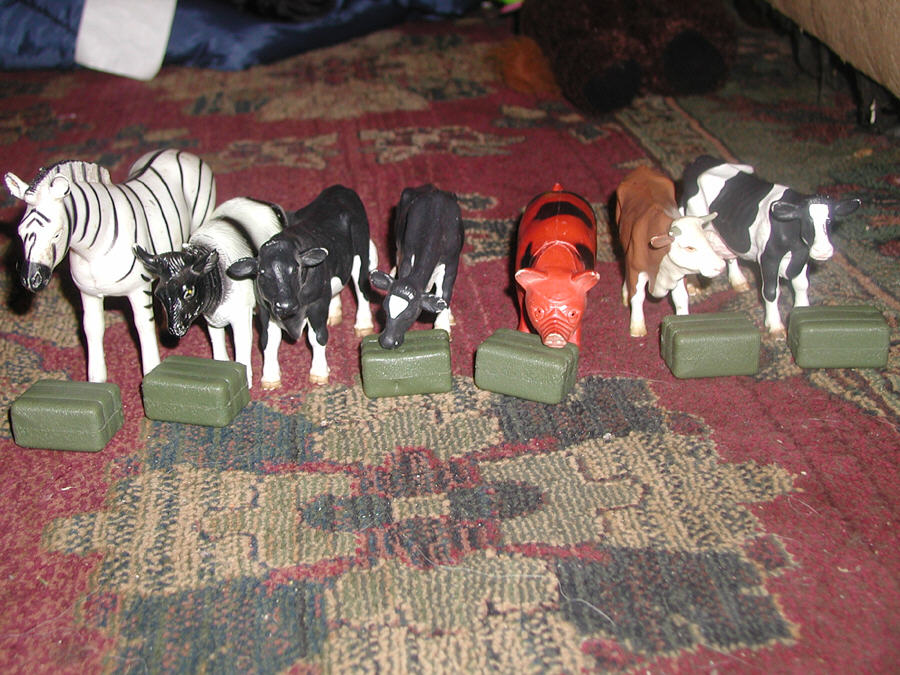
And this scene was found in the living room another day. All of his little animals, lined up with their bales of hay.

These are the little things I’ll miss someday when I don’t have a preschooler around anymore.

Posted in Uncategorized | 4 Comments

August Garden Report


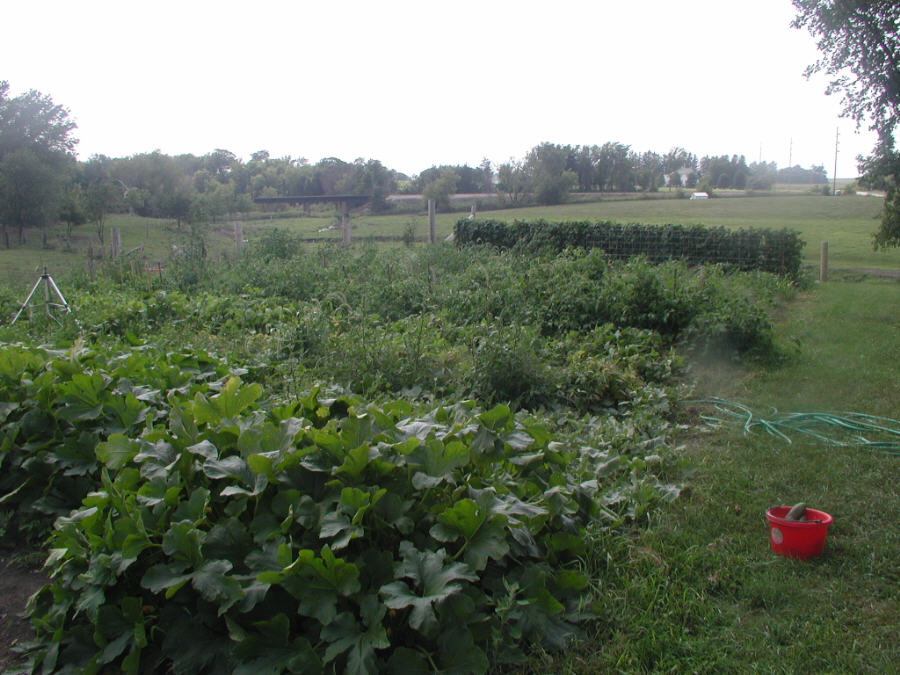
It’s a jungle out there!

Once harvesting gets into full swing, weeding kind of falls by the wayside. But I’m always amazed at how peacefully the vegetables and weeds can coexist at this point. We certainly don’t ever seem to run short of produce, in spite of the weeds.

I’m really liking some of the tomatoes we planted this year. Now if only I knew what variety was what! My ever industrious husband took it upon himself to plant the tomato starts last spring but, being the opposite of his anal retentive computer programmer control freak of a wife, didn’t mark down what varieties went where on the official garden map. So I’m not totally sure what’s what out there. I think the ones I’m liking most are the German Pink and Siletz. I think the ones I’m liking least are the Mortgage Lifter and Black Seaman. Then again, I may have the German Pink and Mortgage Lifter mixed up. And according to my list, I also have Amish Pasta planted, but nothing out there looks anything like any Amish Pasta I’ve grown in the past.

On the watermelon front, I couldn’t resist any longer and cut into one this week. It wasn’t quite ripe, and yet it was ripe enough to be very delicious. I hope we get enough heat yet to finish the rest of them up. I’ve also got Pride of Wisconsin melons all over the place, but haven’t yet cut into one.

In the foreground of this picture are the squash. The jury is still out on them, but so far the Table Queen Bush are far out-performing the Potimarron. The Potimarron plants just looked weepy and ill all summer long to the point that we almost pulled them out, afraid they were going to spread some kind of blight or something to the other squash and melon plants.

So I think we’ll be good for veggies through the winter. (Except for pickles. The girls have already eaten one of the seven quarts I did and have started on a second.) As I type this, Matt is in the kitchen canning green beans and has been at it all afternoon and evening, with just a couple breaks. If you call stopping to feed the animals, and stopping again to return escapee animals to their rightful pens, “breaks”.

Posted in Uncategorized | 3 Comments

They just keep on keepin' on

I keep thinking that the beans are done. Really. I’ve almost ripped them out twice now. But these heritage beans, they just keep on keepin’ on. The Energizer Bunnies of beans. The few (free) hybrid seeds we planted are long gone. But not these – Lazy Housewife and Kentucky Wonder Pole, Empress and Kentucky Wonder Bush. They’re doers. And there are still blossoms on those plants out there.

Matt picked all of these Saturday morning, while I was at the church practicing the organ for my cousin’s wedding. Then Sunday morning, once we all rolled rather tiredly out of bed after the late night wedding dance, we sat around and snapped beans. And drafted my other cousin and her girls into service as well. And they don’t even like green beans! They may never spend a night with us again.

The freezer is already brimming with bags of frozen beans, so Matt pressure canned these. I don’t like the flavor of canned beans as well, but they are handy when you need a quick vegetable on busy nights.

Posted in Uncategorized | 2 Comments

New Digs


Chuck, still half the size of the broiler chicks

The broiler chicks – and Chuck! – are all safe and sound out in the pasture. The move went more easily than I expected, they all just crowded into a corner of the garage and we plucked them up and put them in the trailer. Then we dropped the trailer in the pasture and fed them in the trailer. We went back to the house and had our supper, then went back out just before sundown and put the birds in their shed. I like to lock them in their shed the first night so that they know where shelter is and will return to it at night, or when it rains.

We don’t do chicken tractors. Instead we use electric netting to surround a little insulated wooden shed on skids in the cow pasture. Feeders and waters are set out in the grass. We move the setup every 7 to 10 days, depending on the condition of the grass. I like this setup because the birds have a choice to be where they feel comfortable.

Some like to be in the shed

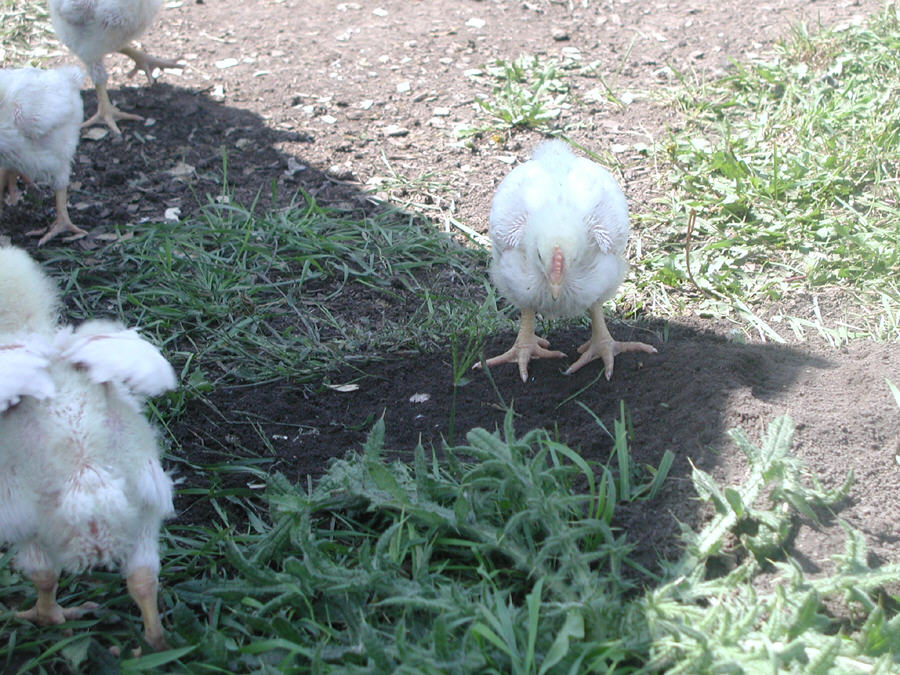
Some like to be outside, contemplating the dirt

Rafe and I took a walk out there this afternoon to see how they were doing. They’re about a 1/4 mile from the house. Before we headed back, Rafe thought we ought to have a picture of ourselves.

Posted in Uncategorized | 4 Comments

Chickens have taken over my garage


a broiler chick takes flight

The broiler chicks have taken over my attached garage with heated floor. Not that they need the heat this time of year, but still, my garage sure makes them a luxury brooder.

Truth be told, I like having them right here close where I can dote over them the first few weeks. And with the spring batch I do every April, that heated floor comes in handy when the weather is cold and damp.

But this week they broke down the chicken wire fence that was supposed to keep them contained, and now all 127 broiler chicks (lost 1 last week) plus Chuck have taken over every corner of my garage. We got their pasture area fenced off last night, but their electric net fencing wasn’t heating up. Their fencing hooks into the electric fence that runs the perimeter of the cow pasture. There’s a short somewhere in that perimeter electric fence, so Matt has to fix that before we can move them out there.

Hopefully tomorrow night…I’m ready to have my garage back.

It’s going to be an interesting move this time. The procedure is that we back the livestock trailer up to the garage, open the garage door, then pick each one up out of the pen and place it in the trailer. But with them free-ranging in the garage I haven’t figured out how we’re going to have the garage door open to load them out, without them running out the door all over the place. The kids are pretty good chicken wranglers, so I’m sure we’ll manage.

If nothing else it should be a good photo opp!

Posted in Uncategorized | 4 Comments

Local food sources?

I find the One Local Summer challenge going on over at Pocket Farm so inspiring, but I’ve never participated. While our meat and veggies obviously come from our own farm, I don’t know where to get locally grown/manufactured staples such as flour or cheese.

So how do you find out if such things exist? I’m looking for things within about a 100-mile radius of here. This would include the cities of Mankato, Red Wing, Rochester and Winona, MN; LaCrosse, and Prairie du Chien, WI; and Waterloo, Marshalltown, Ames, Fort Dodge, Estherville, and Mason City, IA.

Suggestions, anyone?

Posted in Uncategorized | 5 Comments

Random gardening advice

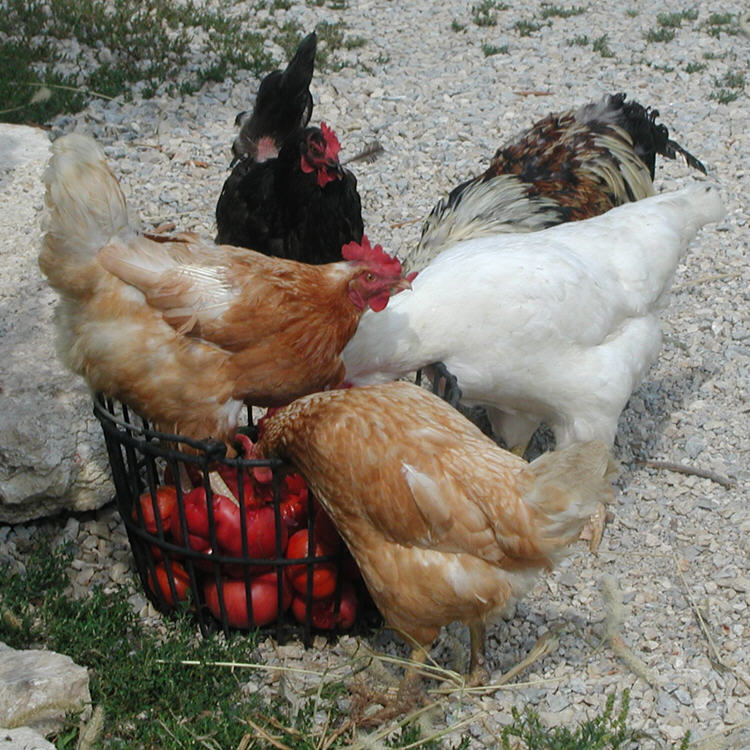
Don’t leave a basket of freshly picked tomatoes where the chickens can find it.

Posted in Uncategorized | 2 Comments

An-tic-i-pay-yay-tion

We can never know about the days to come
but we think about them anyway.
And I wonder if I’m really with ready to eat you now
or just chasing after some finer day.

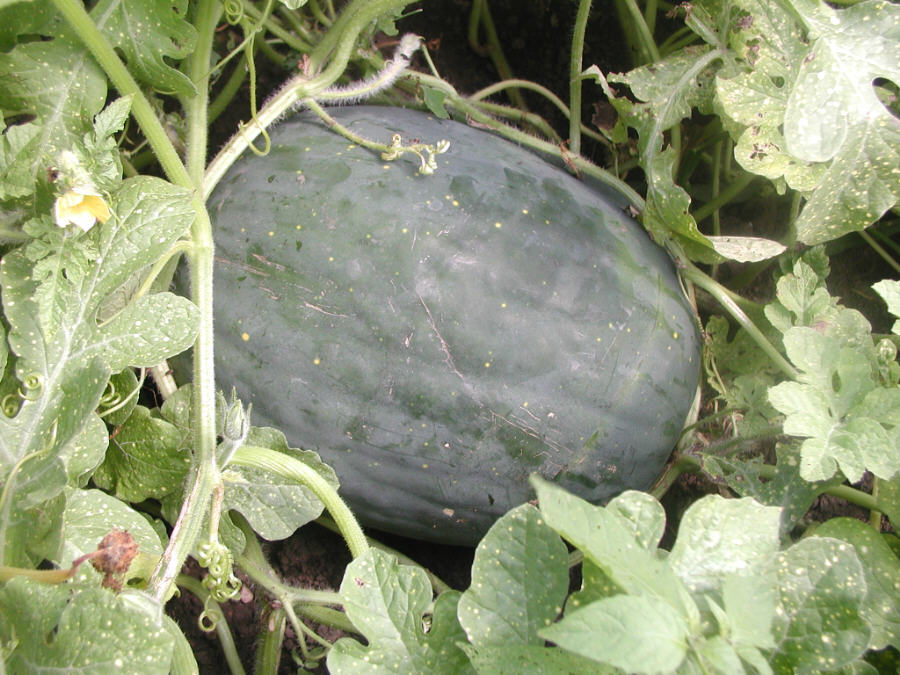
I’ve never managed to grow a watermelon before, but right now there are maybe a half dozen moon-and-stars melons out there in the garden. I’m out there checking on them, first weekly and now daily, like little unborn babies growing bigger and rounder and nearer to their due date.

Tell me, Internet, how do I tell when these things are ripe? The one in this picture is bigger than a basketball. They all sound alike when I thump them. Should the vine start to dry up? I don’t want to miss out on sticky, juicy, melony goodness. In fact I want to have a watermelon party and invite some friends and family over to partake.

And tomorrow we might not be together
I’m no prophet, I don’t know nature’s ways.
So I’ll try and see into your eyes rind right now
and stay right here, ’cause these are the good old days.

With apologies to Carly Simon.

Posted in Uncategorized | 5 Comments